
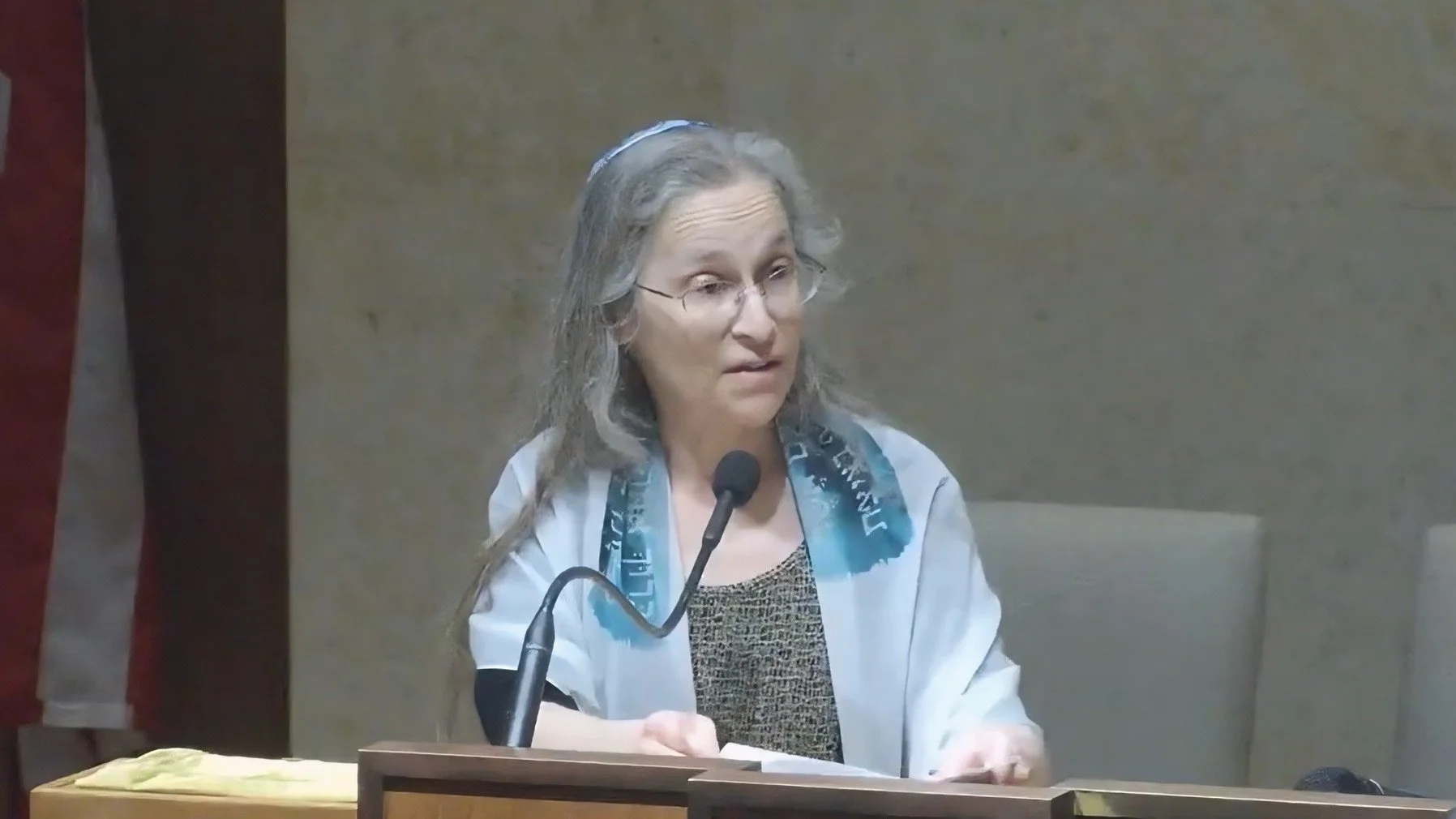
Cantor Gostein’s remarks to Reform Temple of Forest Hills, New York
Expressing Our Gratitude for the Sefer Torah Donation
February 27, 2026
There once was a new little Jewish congregation in Austin, Texas – with big dreams – but no Torah.
What were these big dreams? The members wanted an intimate, family-like atmosphere and close-knit community. A community in which congregants would share in participation and leadership and caring for one another, a community where Judaism moves beyond synagogue walls, and where the music of our combined prayers and intentions fills our spaces and lives with meaning, ruach, and joy – as expressed by the name “Kol Shira”, “voice of song”.
And, I may have mentioned… this community had no Torah.
So its Board co-chair, Sam Brill, while on a call working towards affiliation with the Union for Reform Judaism (the URJ), brought up the question — where can a new little congregation in Austin, Texas find a Torah?
Well, how very lucky Sam was and we are. The URJ directed us to the wonderful Gina Drangel, with whom I then had the pleasure of speaking. It seemed too good to be true. She was going to connect me with her rabbi, Rabbi Mark Kaiserman. I could not believe my ears. I knew Rabbi Kaiserman from my youth group days, from before his first name was Rabbi — I knew he was a mensch even back then. This was b’shert. I was about to re-connect with a respected friend from long ago. And after connecting, it seemed even more “too good to be true.” And yet it is true.
What causes a congregation to decide to donate such a valuable piece of their own congregational and spiritual history? Perhaps part is having a mensch as your spiritual leader (and likely many more amongst your lay leadership). Perhaps part is trying to put goodness into the world we live in and part is wanting to participate in the “l’dor vador” trajectory of Judaism - planting for the future.
I imagine it’s a bit scary to let a piece of you and your history go into the care of someone else in a far off land. Please know that we plan to do more than just keep it safe. We plan to continue your tradition, Judaism’s tradition of doing ma’asim tovim, acts of goodness, and teaching the words in this scroll faithfully to our children.
When we return to Austin, a Bat Mitzvah student will immediately start practicing from this scroll. I wish you could have seen her whole face light up when I mentioned that she would be the first person in our congregation to get to practice from this Torah. On March 6, five more congregants will chant from this scroll as the whole congregation surrounds them to watch up close during our Torah Dedication service.
So this Torah will be in use in our care. We already have a team of folks working on plans for a new cover and researching the Torah’s history.
There are some folks I have not yet mentioned – this could not have been possible without the generosity of the entire RTFH congregation and the stewardship of Seth Diamond, your Temple President, Monte Silberger and Audrey Frankel, the Religious Practices Co-Chairs, and the whole Religious Practices Committee.
I am here receiving this Torah today also because of the support and efforts of the Kol Shira Board and congregation and the generous sponsorship of this trip by Miriam and Shel Levenstein and an anonymous donor.
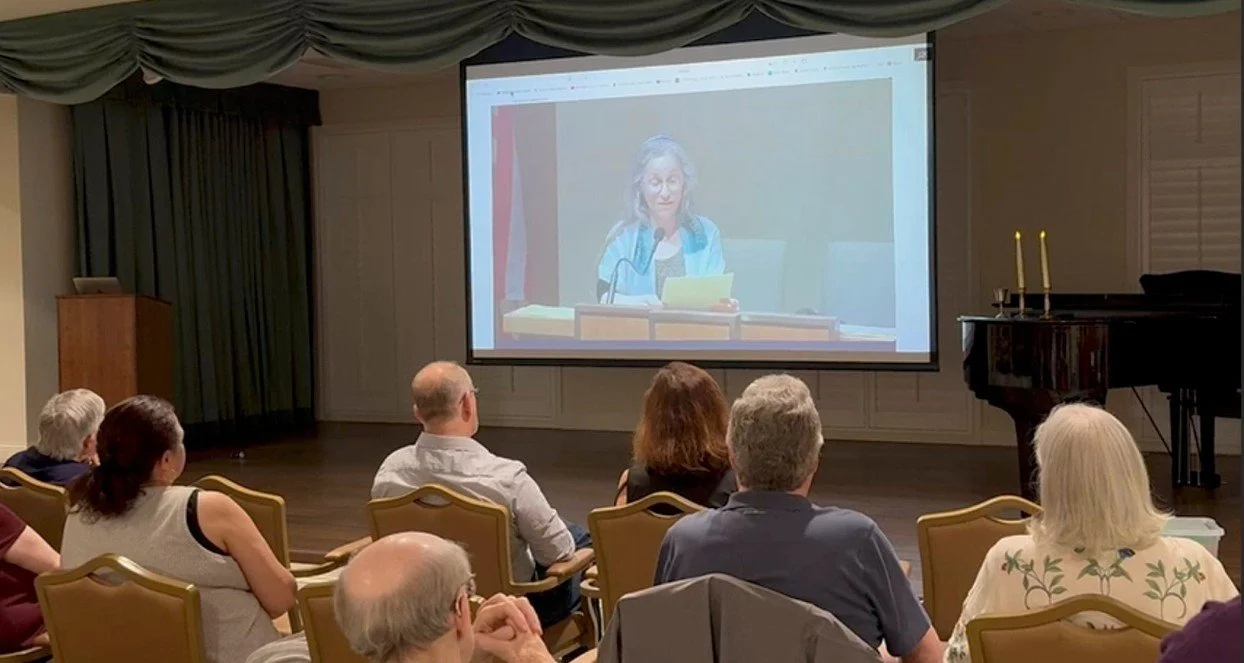
Many members of the Kol Shira community are gathered together now in Austin, watching this service on the RTFH livestream. Shabbat Shalom, y’all! I also want to thank our very gracious host, our cousin Sheila and her family for generously and lovingly hosting Michael and me in their home during our stay.
I feel we can’t truly thank you, RTFH enough, but we are trying to thank you in the ways we’re able. Besides my words of thanks today, we have contributed to your Rabbi’s and Cantor’s Discretionary Funds and to your Torah Restoration Fund. And we will continue to turn and turn and study and chant from this Torah and teach it to our children.
Lo vashamayim hi – this Torah is not in the heavens – it is in our arms, to use from generation to generation and create the Judaism that is yet to be.
—Cantor Abby Gostein
Members of the Kol Shira Community Watch From Austin